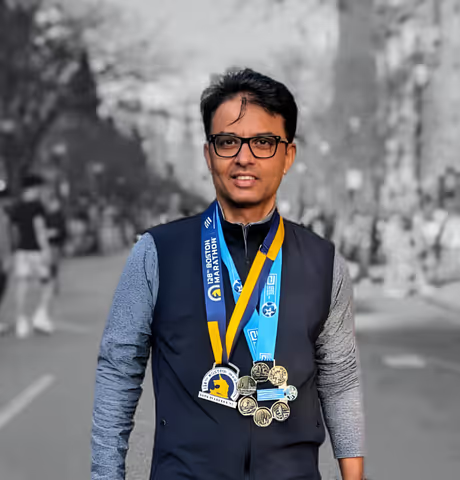
Three iconic marathons - Tokyo, London and the historic Boston share a common environmental challenge - Dry heat
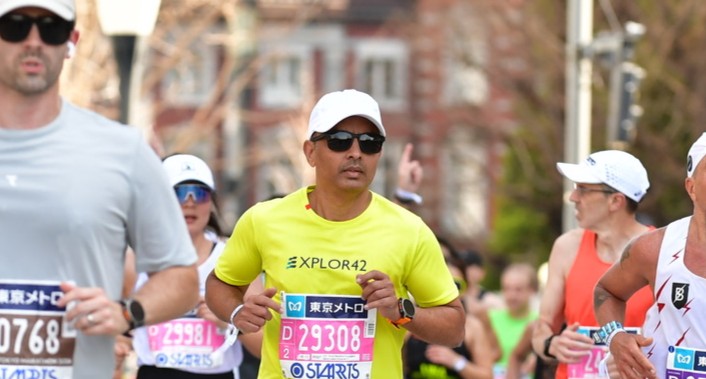
Over the past cycle of racing, I had the privilege of running three iconic marathons - the Tokyo Marathon, the London Marathon, and the historic Boston Marathon. Interestingly, all three races shared a common environmental challenge – Dry Heat
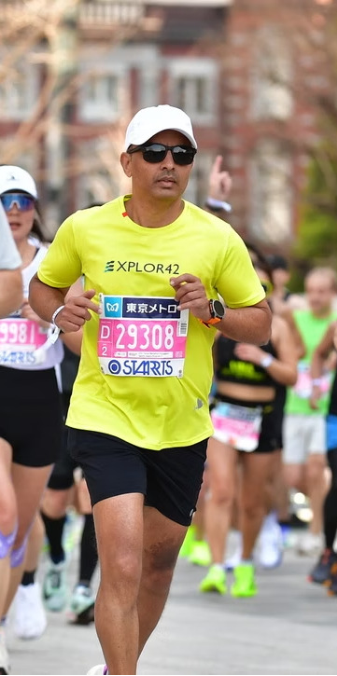
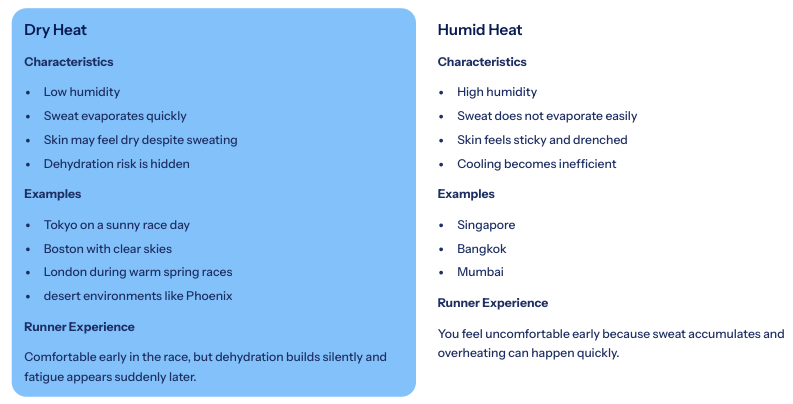
Not the suffocating humidity runners often complain about. Instead,the more deceptive type: dry heat where sweat evaporates quickly and hides howmuch fluid your body is losing. For marathon runners chasing performance, this distinction can makethe difference between a strong finish and a painful final 10 km.
Dry heat occurs when temperature rises but humidity stays low. At first, this feels comfortable. Sweat evaporates quickly, cooling the skin. You don't feel drenched, your clothes aren't heavy, and the early kilometers feel smooth. But physiologically, the body is already working much harder. The danger is simple: you lose fluid faster than you realize.
When you run a marathon in warm dry conditions, several physiological systems begin adapting almost immediately. Understanding these changes can help runners make smarter decisions during a race.
Sweating causes the body to lose plasma - the liquid component of blood. As sweat loss increases
· blood volume decreases
· blood becomes slightly thicker
· the heart works harder to circulate oxygen
This creates something called cardio vascular drift. Your heart rate gradually climbs even though your pace stays the same. Many runners think they are having a "bad day," but the body is simply compensating for reduced fluid volume. Even losing 2-3% of body weight through sweat can significantly impair endurance performance. In dry heat, this happens quietly because sweat disappears almost instantly.
The body tries to maintain a core temperature around 37°C. During a marathon:
· working muscles generate heat
· sunlight adds external heat
· the body must dissipate this heat through sweating
If hydration drops, cooling becomes less efficient and core temperature rises further, increasing fatigue and slowing pace. This is why races that feel manageable early can suddenly become difficult after 25-30 km.
Blood Is Redirected to the Skin - Cooling requires blood flow to the skin surface. But this creates a trade-off. Blood used for cooling is blood not available for working muscles. The result:
· reduced oxygen delivery to muscles
· earlier muscle fatigue
· increased perceived effort
Research shows environmental heat stress can reduce VO2 Max by roughly 5-7%. For a marathon runner, that reduction can translate into several minutes of performance loss.
Heat also changes metabolism. When the body is under thermal stress,it relies more heavily on carbohydrates. This means glycogen stores deplete faster. In practical terms:
· energy runs out sooner
· fatigue arrives earlier
· the dreaded "wall" appears sooner than expected
Many runners assume humidity is always worse, but the two types ofheat challenge the body differently.
A common mistake many marathon runners make is waiting until they feel thirsty. But thirst is a delayed signal of dehydration. By the time thirst appears, your body may already be behind. Smart runners start hydration very early in the race.
About 2-4 hours before the start: Drink 5-10 ml of fluid per kg of body weight. For a 70 kg runner, that is roughly 350-700 ml of fluids.
Even if you feel fresh, begin early. Small sips help maintain bloodplasma levels and prevent heart rate drift later.
· take a few sips at the firstaid station
· include electrolytes, ifavailable
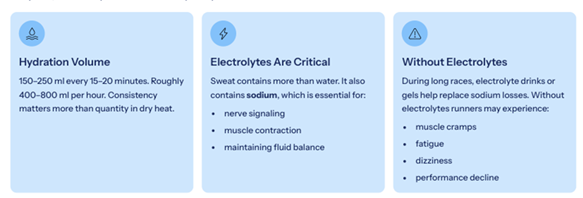
A good rule for endurance events: Drink 150-250 ml every 15-20 minutes, depending on sweat rate. That equals roughly 400-800 ml per hour. In dry heat, consistency matters more than quantity.
Dry heat does not announce itself loudly. Instead, it gives subtle signals. Watch for these signs:

Skin feels dry despite effort - a hallmark of low humidity conditions
Sudden thirst appears - a delayed signal that dehydration is already underway
Legs feel unexpectedly heavy around 25-30 km.
If you notice these signs, the environment is already influencing your physiology.
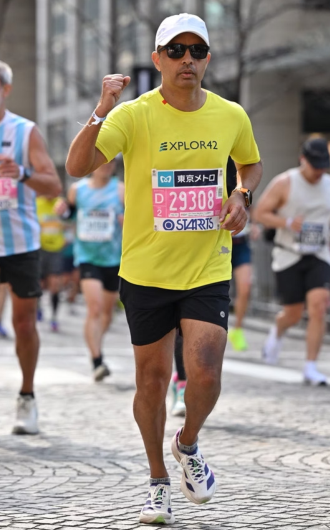
Running the Tokyo Marathon after experiences in the London Marathon and the Boston Marathon reinforced something powerful.
“The marathon is not just about endurance. It is about awareness.”
Weather changes. Courses change. Crowds change. But the most important skill remains constant: Listening to your body.
Dry heat doesn't shout. It whispers.
Notice the whispers early. Hydrate sooner, adjust effort, and respect the physiology of the human body over 42.2km.
Awareness is the difference. Between surviving a marathon & and running it wisely.